Your Position :
Home  >  Potassium cyanide

Potassium cyanide

Potassium cyanide (chemical formula: KCN) is an inorganic compound belonging to the alkali metal cyanides. It is a white crystalline solid that is highly solubl
Introduction
DESCRIPTION
Potassium cyanide (chemical formula: KCN) is an inorganic compound belonging to the alkali metal cyanides. It is a white crystalline solid that is highly soluble in water, where it can generate hydrogen cyanide gas. It exhibits high ionic character and rapidly dissociates in water into cyanide ions (CN⁻) and potassium ions (K⁺). The cyanide ion acts as a strong Lewis base and is capable of forming coordination complexes with numerous metals, thereby demonstrating significant coordinating ability. One of the primary applications of this compound is in the smelting and extraction of metals, particularly in the recovery of gold and platinum. Furthermore, due to its extreme toxicity to living organisms, potassium cyanide is also widely utilized as a component in pesticides.

Product Introduction 
Foreign name Potassium Cyanide
Chemical formula KCN
Molecular weight 65.116
CAS login number 151-50-8
EINECS login number 205-792-3
Fusing point 634
Boiling point 1625 
Density 1.52g/cm³
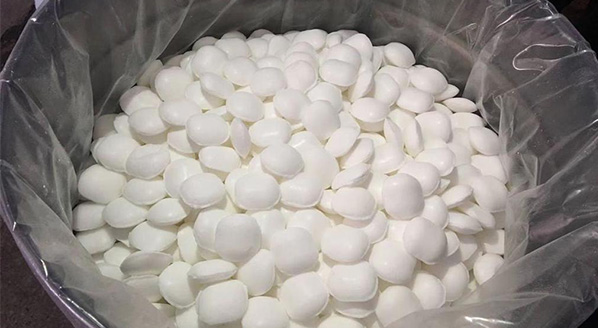
Appearance White crystalline powder
Security description S7S28S29;S45S60;S61
Hazard symbol R26/27/28;R32;R50/53
UN Dangerous Goods number 1680
 
 Main features of our company
1. Reasonable price, stable quality and short delivery time
2. According to the policies of different countries, timely follow up orders and arrange shipments, and provide complete customs clearance documents
3. Can notify customers of market price trends in a timely manner
4. Any inquiry will be replied within 12 hours
 
Packaging and Delivery 
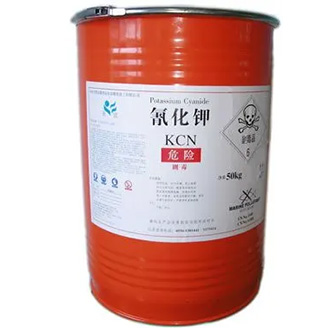
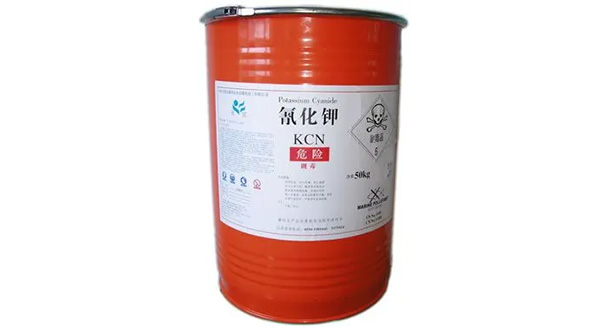
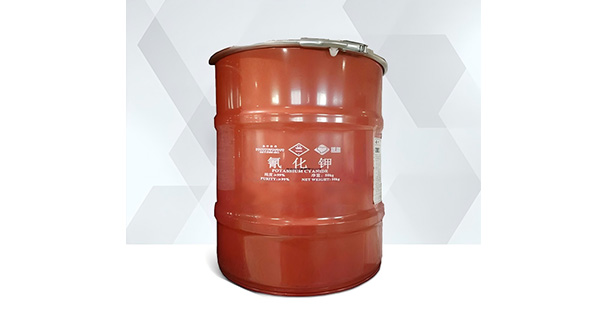
50kgs steel drum / Loading 18 tons in 20ft container
 
Product application 
Metal Extraction and Metallurgy
Potassium cyanide plays a crucial role in metal smelting and extraction [2], particularly in the recovery of gold and platinum. Gold can exist in the form of gold cyanide; potassium cyanide reacts with gold to form a stable gold cyanide complex (Au(CN)₂⁻). Gold cyanide exhibits high solubility in water, forming hydrocyanoauric acid (HAu(CN)₂), which allows gold to be readily dissolved out of the ore. The resulting solution is subsequently subjected to electrolysis or other methods to reduce and recover the gold. Similar to its role in gold extraction, potassium cyanide also plays a key part in the recovery of platinum. Platinum typically exists in the form of platinum cyanide; it reacts with potassium cyanide to generate platinum cyanide complexes, which are then dissolved out of the ore through chemical reactions in an aqueous solution. Following extraction, the platinum can be recovered via electrolysis or other separation techniques. This process is widely employed in the extraction of gold from mines and the recovery of precious metals.
Pesticide Manufacturing
Potassium cyanide serves as one of the primary ingredients in the manufacture of pesticides. Its inherent toxicity renders it highly lethal to insects, leading to its widespread application in the formulation of insecticides. However, due to its extreme toxicity to humans and other non-target organisms, the use of potassium cyanide in the agricultural pesticide sector is subject to strict regulation and restriction. [4-5] In the agricultural field, potassium cyanide can also be utilized as a soil fumigant. [6] Under specific circumstances, it may be employed to eradicate harmful organisms present in the soil, thereby improving the growth environment for crops.
Laboratory Applications
Potassium cyanide is a strongly alkaline substance that can function as a catalyst or a ligand in numerous organic synthesis reactions. It is widely utilized as a basic reagent in organic synthesis. It reacts with various organic compounds to form cyano ligands—specifically, cyanide ions. This capability is of significant importance in the synthesis of cyano-containing compounds, such as cyanoesters and cyanoalcohols. These compounds frequently serve as intermediates in the production of pharmaceuticals and in general organic synthesis processes. In laboratory settings, it is employed in the preparation of various cyanide salts and specific organic compounds containing cyano groups. Furthermore, potassium cyanide participates in metal complexation reactions, forming stable metal cyanide complexes. It is utilized in various chemical studies and experiments—for instance, to investigate the coordination numbers and coordination geometries of metal ions. Potassium cyanide can also serve as an electrolyte in electrochemical research, particularly in processes involving metal plating and other electrochemical experiments. Solutions of potassium cyanide provide the necessary electrolyte medium to facilitate the flow of electric current, thereby enabling electrochemical reactions to occur.
Metal Plating
Potassium cyanide serves as a key component of plating baths in the metal plating industry, particularly during the electroplating of copper, silver, and gold. Its coordination properties enable it to form stable complexes with metals, thereby facilitating the formation of uniform and dense plating layers on metal surfaces.
Medical Applications
Despite its extreme toxicity, potassium cyanide retains a few limited applications within the medical field. It is employed in the synthesis of certain pharmaceutical intermediates to construct cyano-containing compounds. Potassium cyanide is capable of disrupting the respiratory chain within cancer cells, thereby inducing cellular hypoxia and asphyxiation. However, research in this area remains in its preliminary stages, requiring more extensive experimental and clinical studies to validate its efficacy and safety. Potassium cyanide has also been explored in the treatment of certain rare diseases, such as pyruvate metabolism disorders. In such instances, it may be utilized to modulate the body's pyruvate metabolism in an effort to alleviate patient symptoms. It must be emphasized that, although potassium cyanide has demonstrated potential therapeutic effects in certain medical studies, its high toxicity and inherent hazards present significant challenges regarding its practical application in clinical medicine. Any use of potassium cyanide—whether for experimental or therapeutic purposes—must strictly adhere to rigorous laboratory safety protocols and medical ethical guidelines to ensure the safety of both patients and researchers.
Preparation of Metal Cyanide
Potassium cyanide also plays a pivotal role in the synthesis of other metal cyanides. Through the use of potassium cyanide, a wide range of metal cyanides can be prepared; these compounds find applications in various fields, including metal plating and chemical analysis.

 
Inquiry
Please feel free to submit yaour inquiry information to us. We will contact with you as soon as possible.
Name:
* Email:
* Message:
*Verify:
Privacy Policy
In order to provide you with a better browsing experience, this website will use cookies. By clicking "Accept" or continuing to browse this website, you agree to our use of cookies.